
Improve Detection and Hunting with CTI Context
Bring ATT&CK context, linked knowledge, and technique inference into detection engineering and threat hunting workflows with CTI Butler.
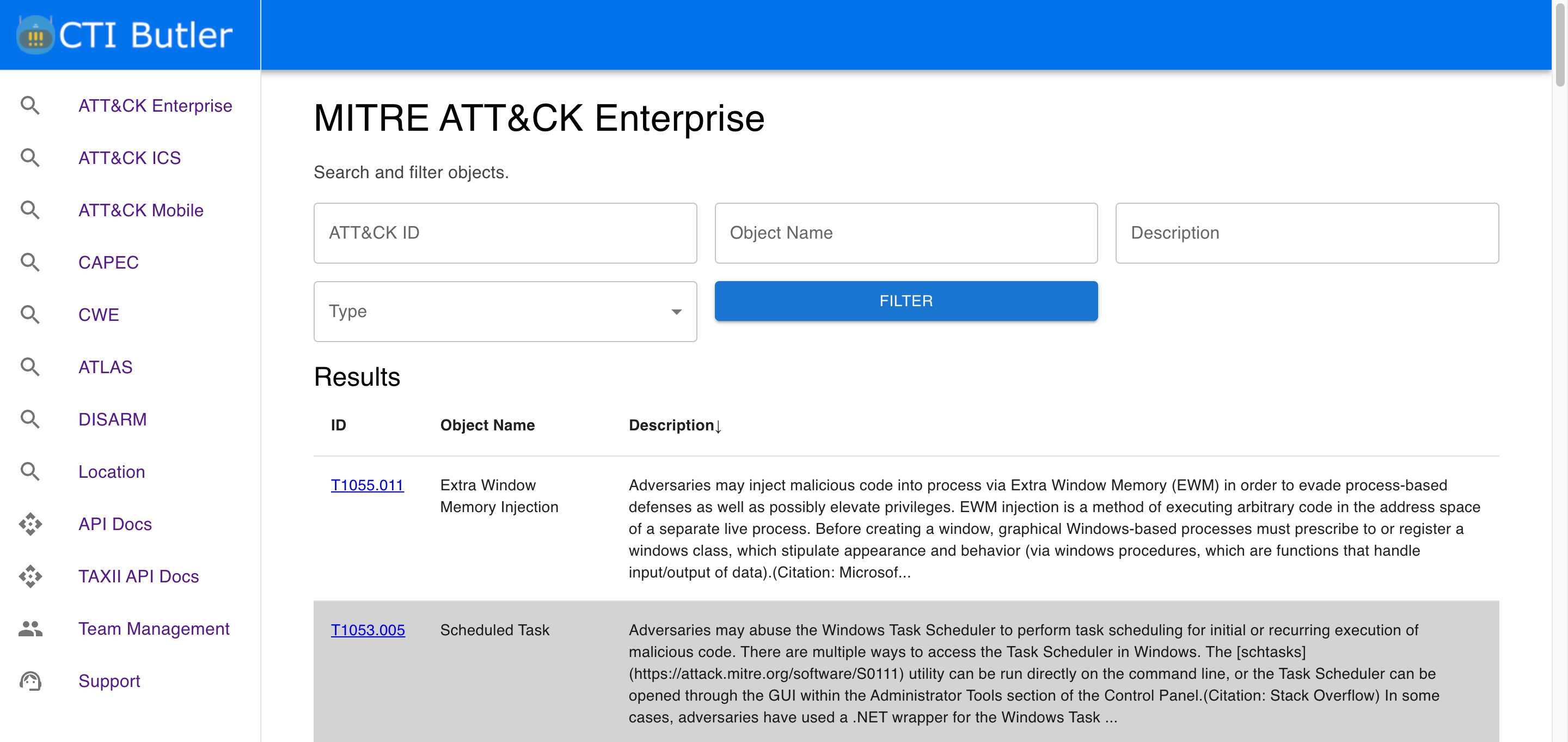
Overview
Detection and hunting teams often need more than a single ATT&CK label. They need surrounding context that helps explain likely behavior, adjacent techniques, and defensive implications.
CTI Butler supports that work by making ATT&CK and related knowledge easier to retrieve, connect, and operationalise.
It is especially useful when a team starts from a partial clue and needs to build outward. CTI Butler’s Inference Engine helps connect limited information to likely attacker behavior across earlier and later stages of an attack, which gives detection and hunting teams a better way to reason about realistic activity sequences.
What This Supports
- Faster ATT&CK-based research during rule creation and hunt design
- Better understanding of linked techniques and attack progression
- More consistent validation of coverage against realistic attacker behavior
Why Teams Use CTI Butler for This
CTI Butler includes technique inference and linked context that can help teams move beyond isolated ATT&CK references.
Instead of treating a technique as a static tag, teams can use it as a pivot into related behaviors, supporting material, and downstream defensive decisions.
That makes CTI Butler helpful for both reactive and proactive work. A team can use it to interpret an existing signal more accurately, or to plan hunts and attack-emulation scenarios around what behavior is likely to matter next.
Example Outcomes
- ATT&CK-driven enrichment for detection content
- Coverage validation using likely predecessor and successor techniques
- Faster movement from analyst clue to hunt hypothesis or attack-emulation path